
MAREHA Modest Fashion E-commerce
2026MAREHA brings modest fashion shopping into one branded storefront, with 2 variant dimensions, guest checkout, promotions, and order tracking.
Key Features
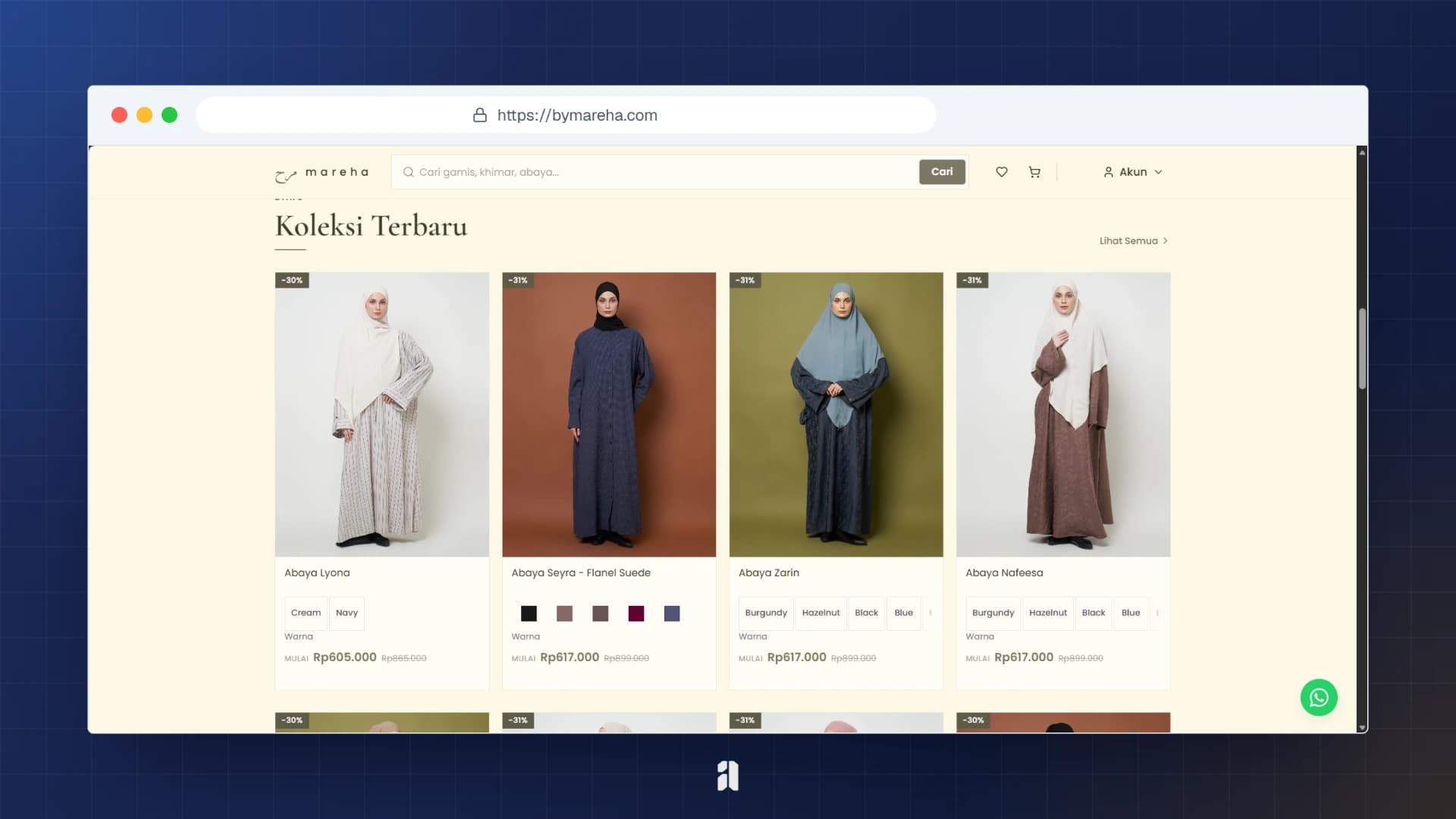
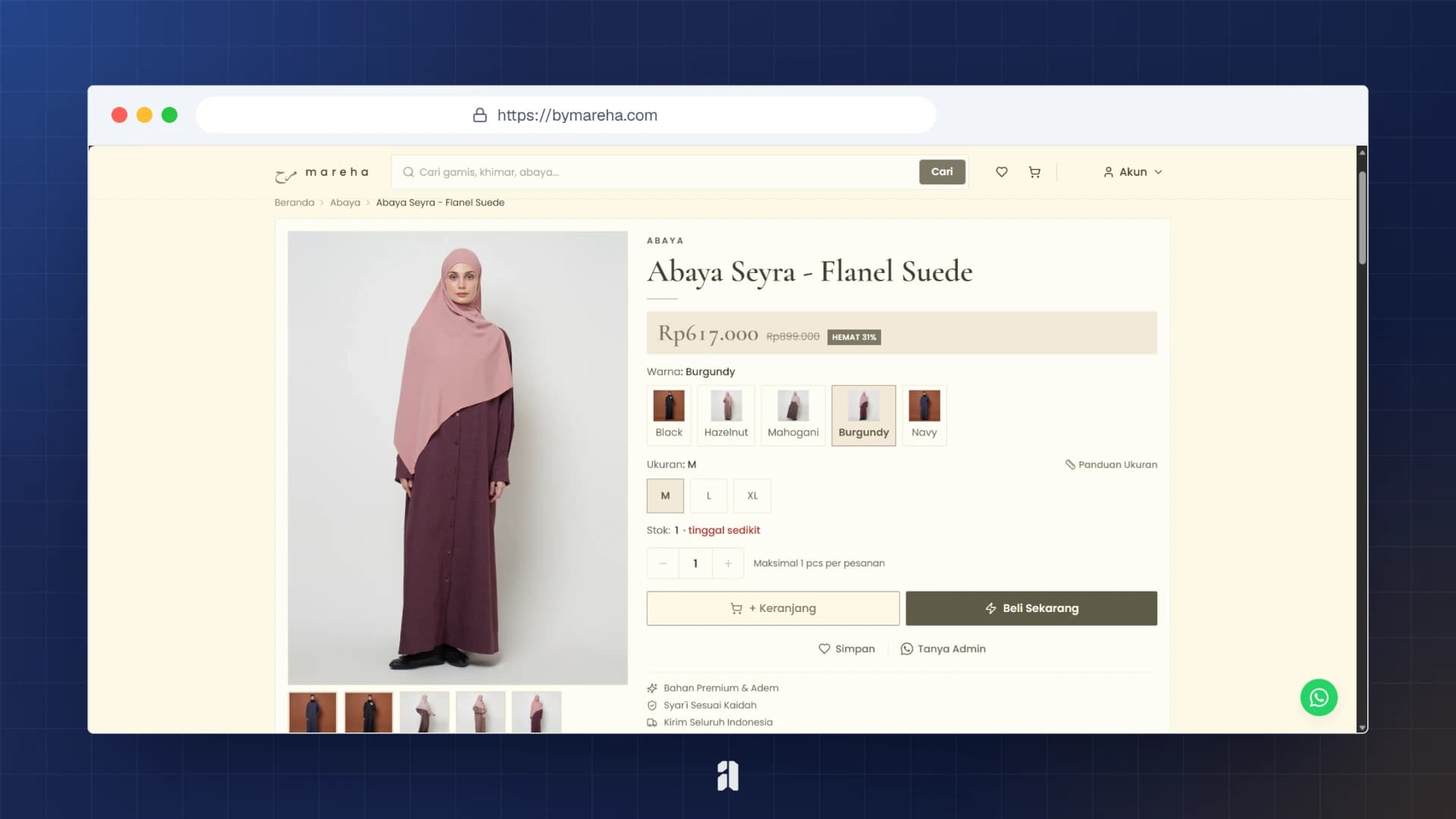
- 01Explore modest fashion collections through a distinctive editorial storefront
- 02Choose color and size with unavailable variants clearly disabled
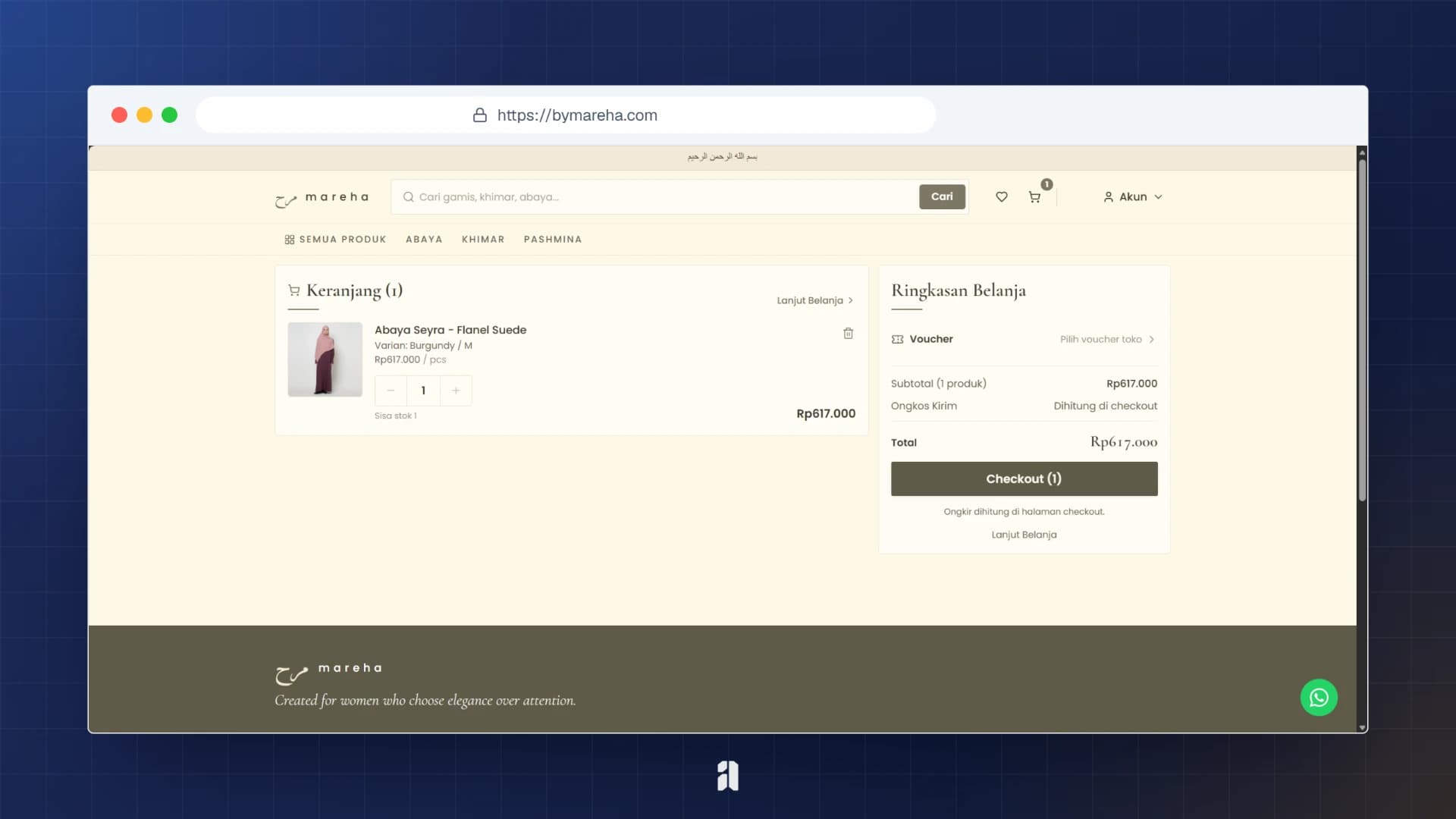
- 03Complete purchases as a guest without creating an account
- 04Apply eligible vouchers and view promotional product prices
- 05Select delivery services with shipping rates during checkout
- 06Track shipment progress through an order delivery timeline
- 07Save favorite products to revisit before purchasing
- 08Schedule collection releases and manage campaigns through merchant administration
Project Details
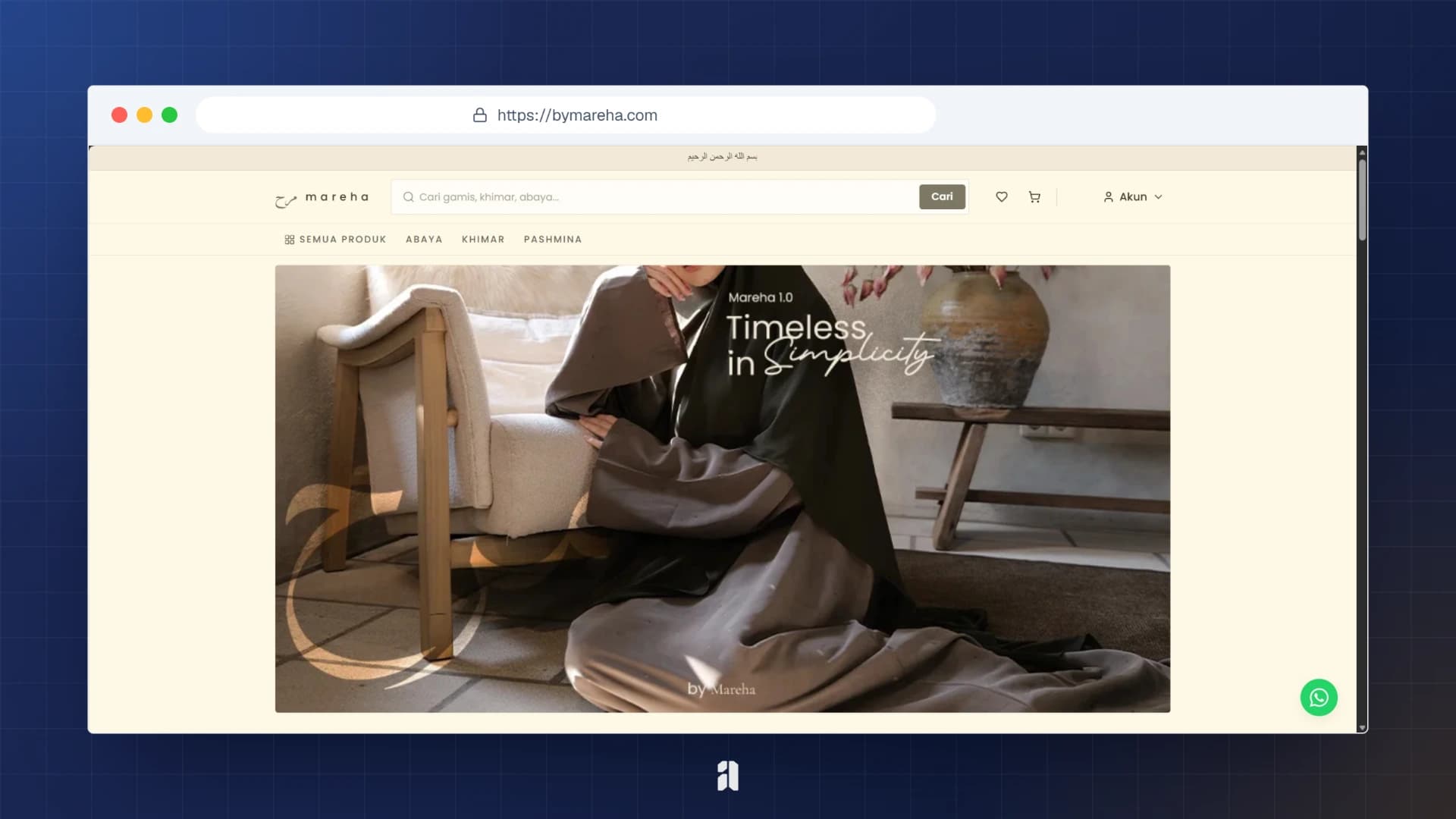
We built MAREHA's bespoke e-commerce storefront for a Jakarta modest womenswear brand, combining an editorial shopping experience with 1 shared commerce backend. The interface brings gamis, khimar, matching sets, and essentials into a cohesive storefront with warm ivory backgrounds, olive accents, and serif typography. Indonesian commerce copy guides customers through discovery, product selection, checkout, and tracking. The result is a distinct brand experience supported by reusable commerce services, with product choices organized around 2 variant dimensions: color and size. Our implementation scope connected brand presentation, storefront functionality, and deployment within the platform's Tier 2 customization model. MAREHA received its own application and deployment resource while retaining shared catalog, order, payment, and administration services. The client runbook records a planned collection launch for 28 August 2026, making scheduled publishing and promotion windows relevant requirements. A reproducible demonstration dataset covers 16 products, 5 vouchers, and 6 example orders. These figures describe implementation fixtures, not customer traffic, actual sales, or the size of the production catalog. We separated storefront design from transaction processing using Next.js 15 and React 19 on the frontend, with an Express API, Drizzle ORM, and PostgreSQL behind it. Tenant-scoped database transactions and Row-Level Security separate store records within the shared database. The platform provides Xendit payment and Biteship shipping integrations, while the merchant admin manages catalog content and campaigns. A notable operational decision was running the storefront on Node.js 22 while retaining Bun for builds: the Dockerfile documents a 450-request comparison in which Bun memory grew from 355 MB to 899 MB while Node stabilized around 300 MB. The documented delivery demonstrates measurable engineering scope without substituting sample data for commercial results. MAREHA adds 1 independently deployed storefront with 0 client-specific backend forks; its demo configuration exercises 2 promotion campaigns and 5 voucher configurations. The repository's 8 September 2026 audit also records 74 passing Mareha tests alongside successful storefront build and type checks. Together, these deliverables support a branded purchasing journey and merchant-managed operations. Revenue uplift, conversion changes, and production customer volumes are not established by the repository and are therefore excluded from the outcome claims.