
LPK Kodama Hikari Bilingual Website
2026LPK Kodama Hikari brings 2 languages, editable program information, and 3-step student registration together in one training website.
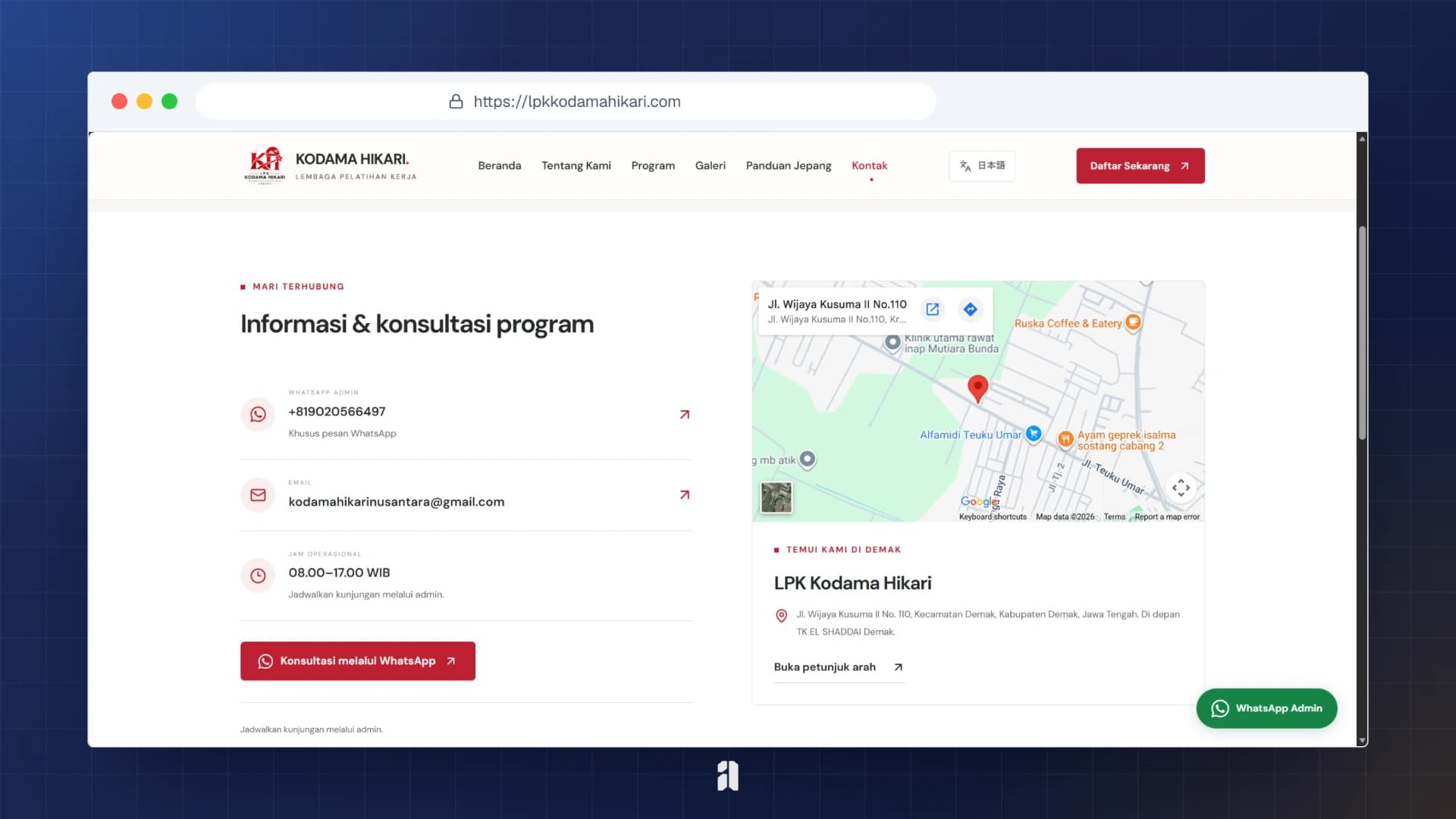
Key Features
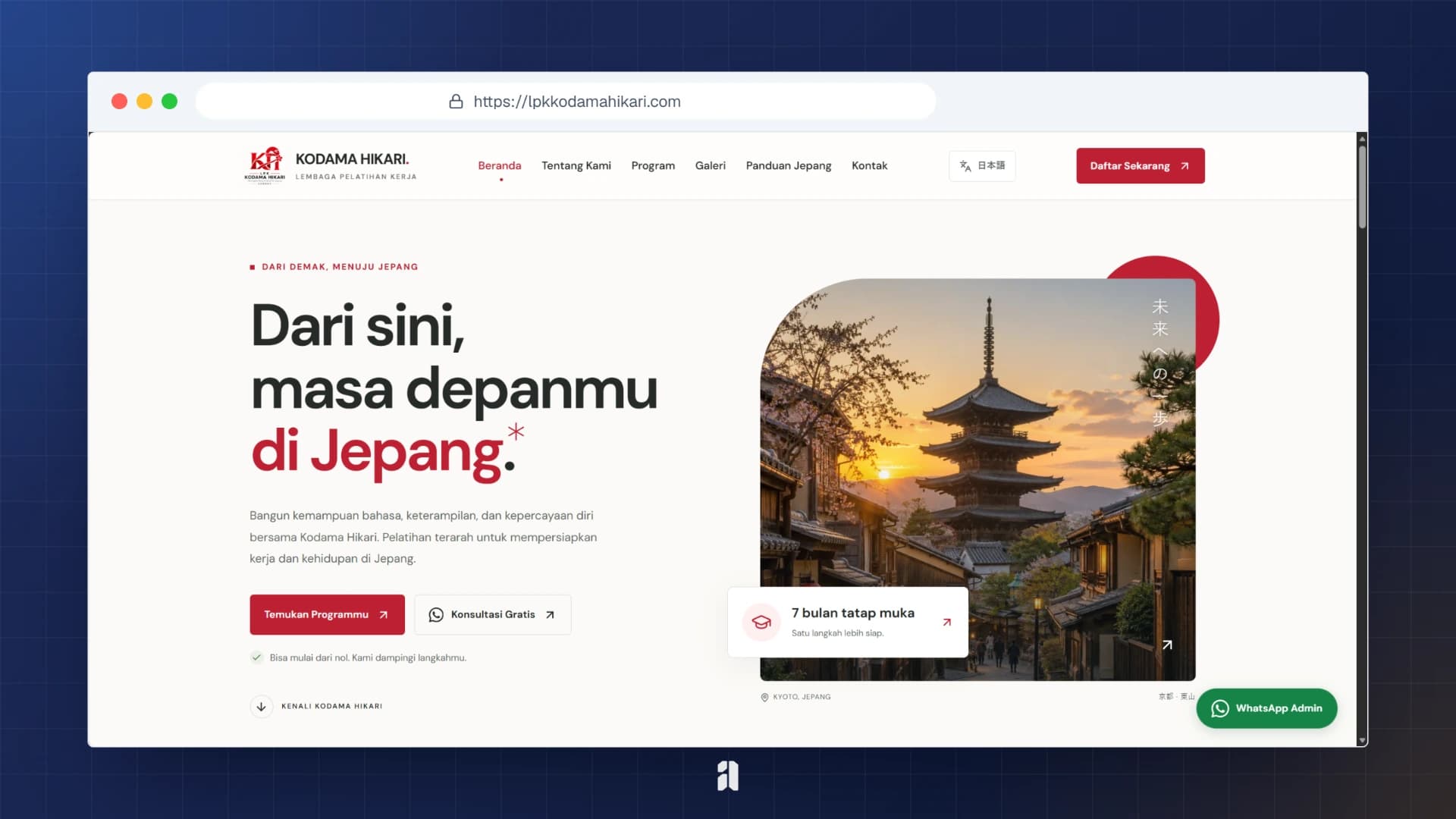
- 01Explore training information in 2 languages with page-preserving switching
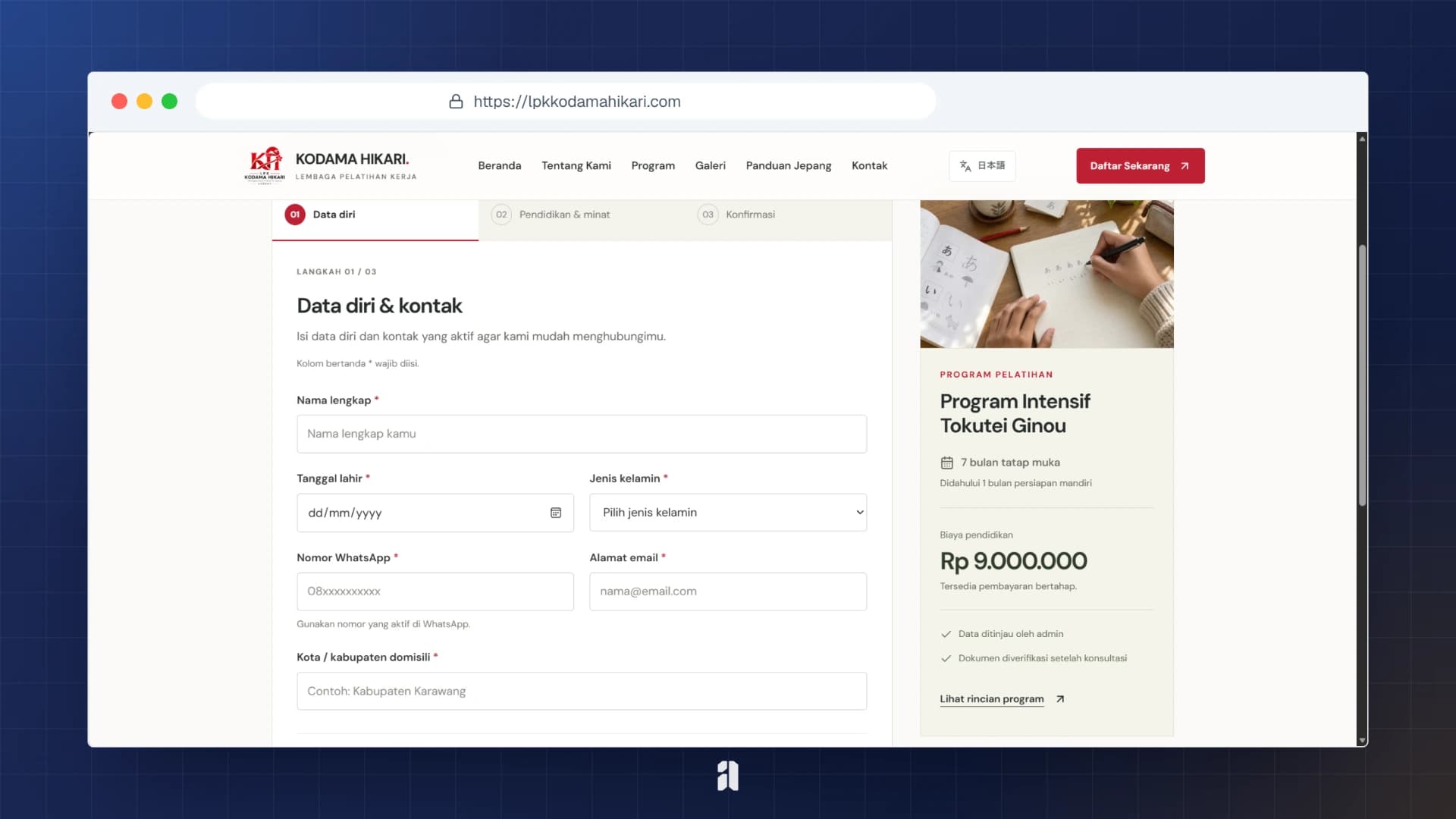
- 02Complete student registration through 3 validated steps and receive a reference
- 03Compare 3 program interests before submitting an application
- 04Find answers across 21 supplied FAQ topics using search
- 05Compose pages with 8 reusable section types and draft previews
- 06Manage shared program details through 1 integrated administration workspace
- 07Review student applications in 1 authenticated registration inbox
- 08Discover content through 2 locale routes with localized search metadata
Project Details
We built a bilingual training website for LPK Kodama Hikari in Demak, Indonesia, combining institution-managed content and 3-step student registration in one application. Indonesian and Japanese visitors can explore the institution, training programs, preparation guides, and contact information through 2 locale routes. The implementation gives prospective students a clear path from learning about a program to submitting their details and receiving a registration reference. It also gives staff an authenticated workspace for reviewing applications and maintaining published information. Our implementation covers the public website, CMS content models, registration workflow, localization, and deployment configuration. The page CMS expansion established 10 published starting pages, supported by 21 FAQ entries and 6 team records documented in project verification. Editors can assemble pages from 8 reusable section types and manage shared program details without repeating the same information across separate page templates. This scope addresses a training institution's practical publishing needs; production traffic, enrollment conversion, delivery budget, and team size are not documented in the repository. We combined Next.js 16.2.10, React 19.2.3, and Payload CMS 3.86.0 in a single application backed by PostgreSQL and S3-compatible media storage. Interface translations and editorial translations use separate layers, while shared slugs preserve page identity when visitors switch languages. One substantial engineering challenge was introducing localization without discarding existing content: the documented migration moves 307 columns into 83 locale tables. Explicit data-copy steps supplement generated schema changes, and a rehearsal workflow checks migration behavior inside a transaction that is rolled back. Recorded verification demonstrates functional delivery across 50 public route-and-viewport combinations and 24 CMS interface checks during the page CMS expansion. Those checks covered responsive layouts, page metadata, image rendering, editor controls, and browser errors. A synthetic application also verified validation, consent, persistence, confirmation, and duplicate-submit protection before its test records were removed. These are implementation and verification outcomes rather than measured enrollment gains. They establish a practical foundation for staff-managed publishing and student intake, with final-domain launch settings and production operations remaining deployment responsibilities.