
Custom Stiker Motorcycle Decal Store
2026Custom Stiker brings motorcycle decal shopping, checkout, and order tracking into 1 branded storefront backed by a shared commerce platform.
Key Features
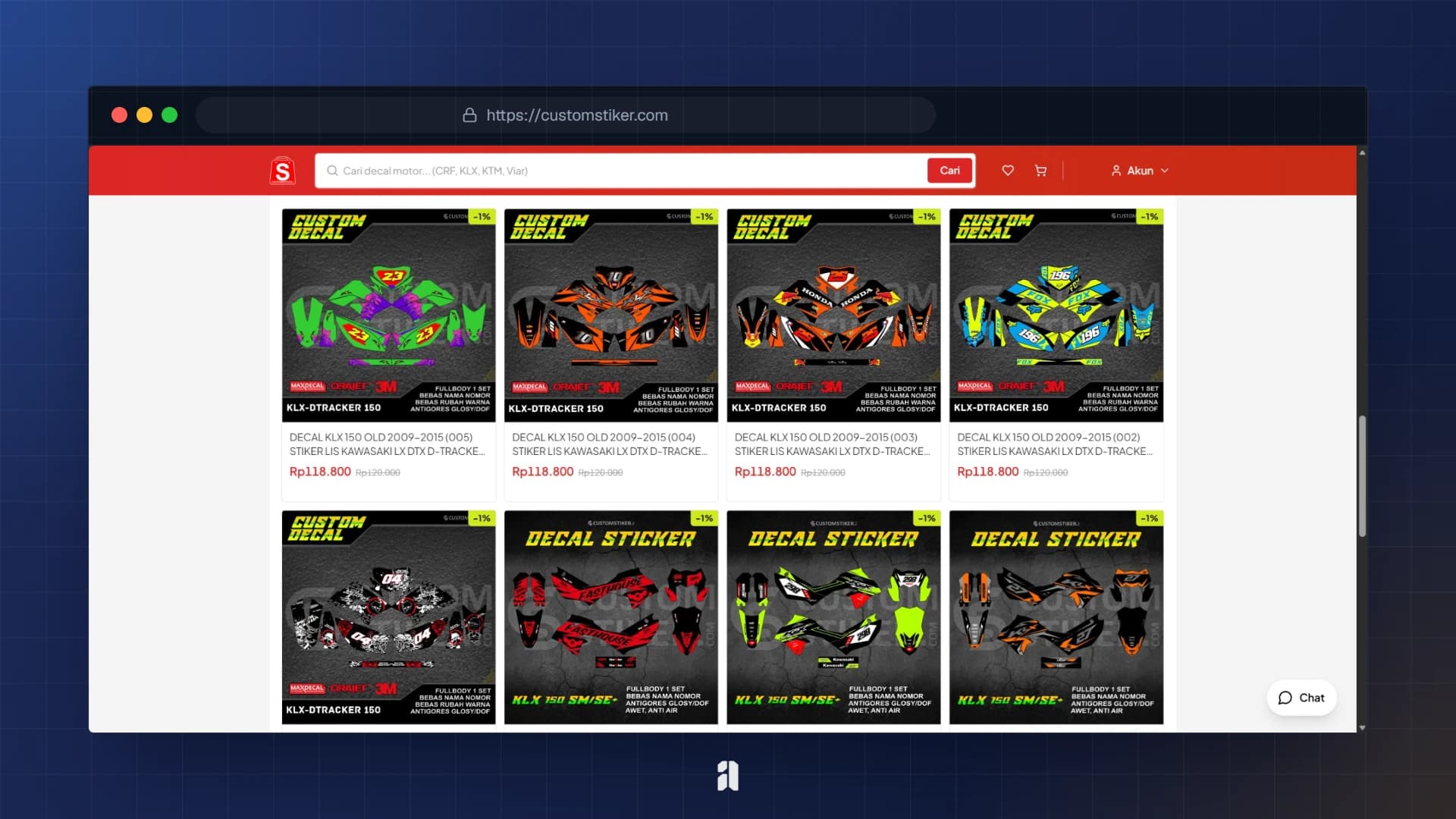
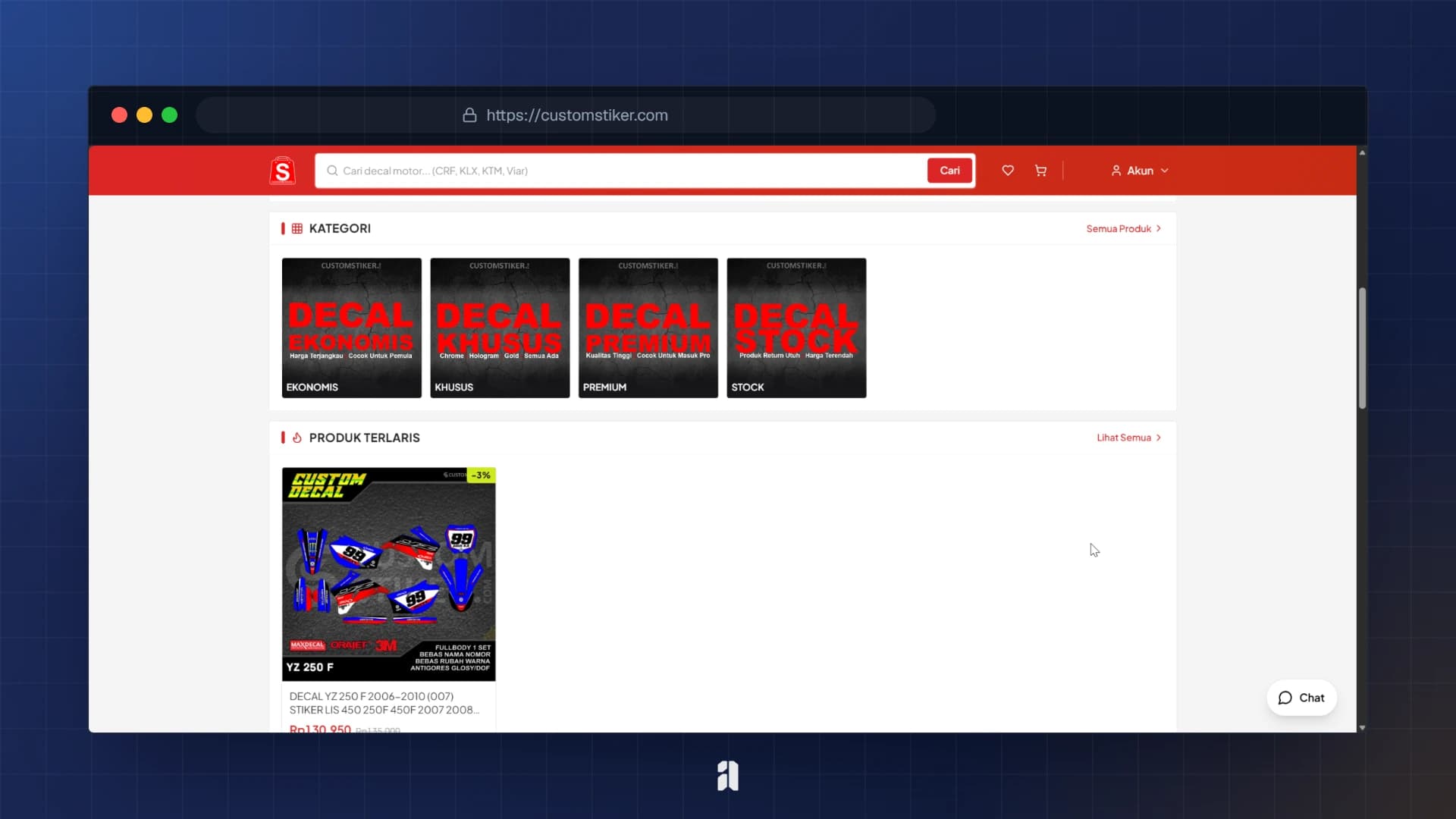
- 01Browse motorcycle decal designs across 4 demonstration catalog groups
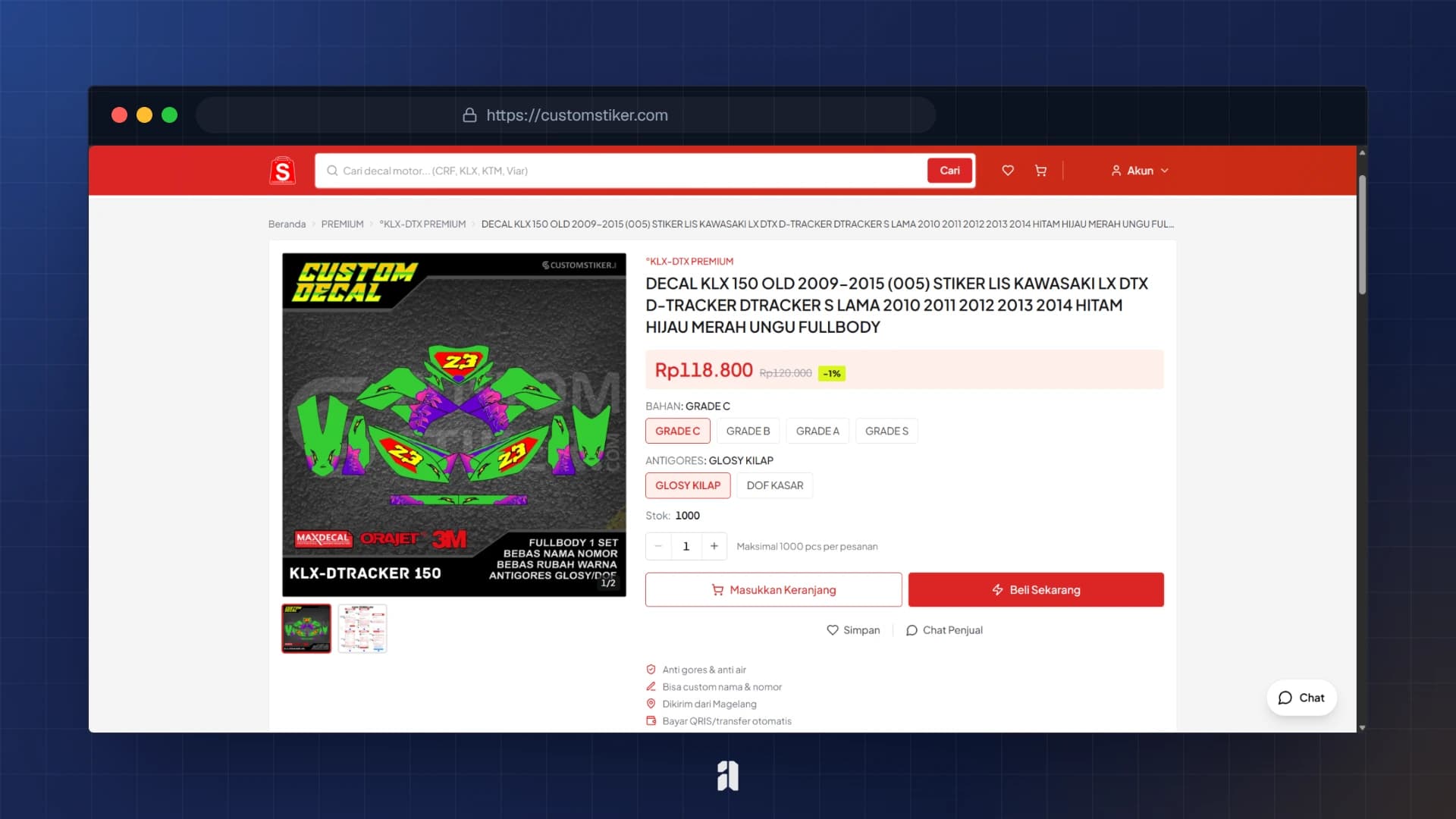
- 02Select available finishes and variants before adding products to cart
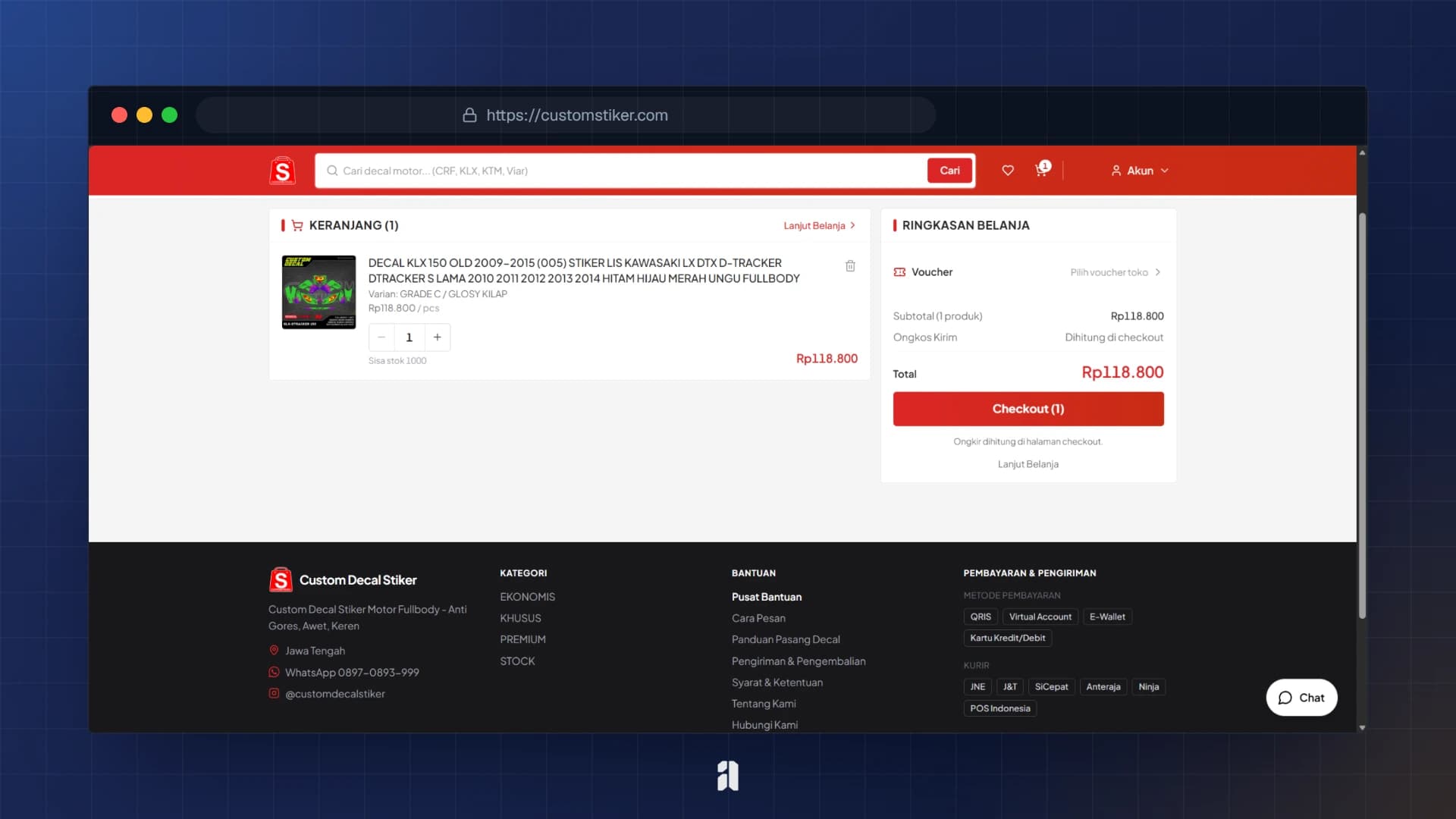
- 03Complete purchases through integrated address, shipping, and payment selection
- 04Apply eligible vouchers and review discounts before placing orders
- 05Track order status and shipment updates from customer order pages
- 06Manage products, banners, promotions, and orders through merchant administration
- 07Follow 2 dedicated guides for ordering and installing decal kits
- 08Contact the store through WhatsApp for custom design coordination
Project Details
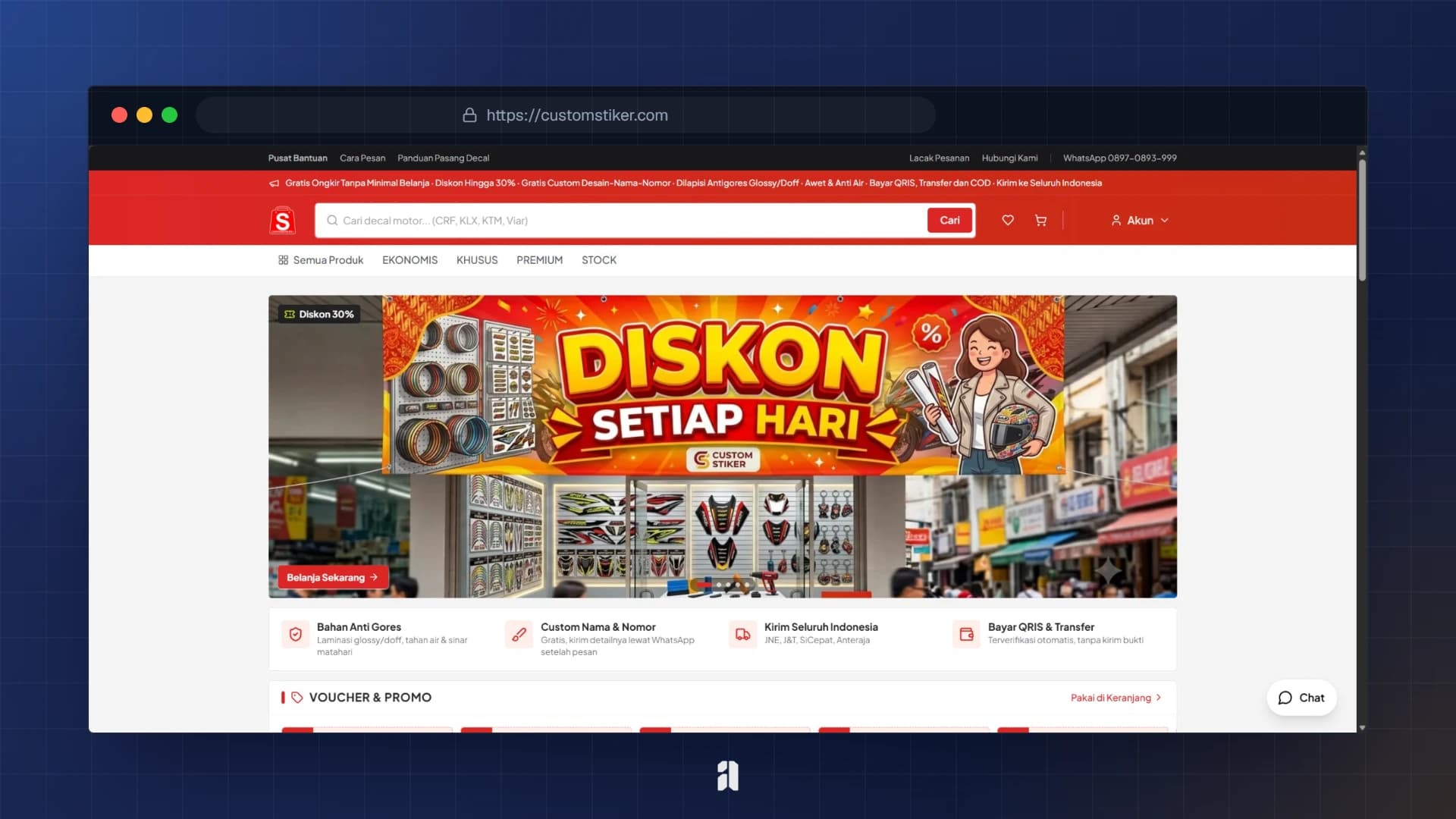
We built Custom Stiker as a dedicated motorcycle decal storefront for a Magelang business, bringing product discovery, checkout, and order tracking into 1 branded shopping experience. The Indonesian interface uses familiar marketplace patterns: prominent prices, category navigation, promotional banners, and mobile navigation. Customers can browse motorcycle-specific designs, select available finishes and variants, and continue through an integrated purchase journey. The site gives the merchant an owned retail channel alongside its existing Shopee presence, with a visual identity tailored to its customers. Our implementation connects 3 operational surfaces: the customer storefront, merchant administration, and platform management. The project scope covers the bespoke storefront, its integration with shared commerce services, and deployment configuration. The repository's demonstration catalog organizes products into 4 top-level groups: trail motorcycles, automatic scooters, sport motorcycles, and accessories. These groups describe the supplied demo structure, not verified production inventory or sales volume. Merchant tools manage products, banners, vouchers, orders, and store settings, while dedicated ordering and installation guides explain the product-specific buying journey. We separated the custom presentation from 1 shared commerce API to preserve tenant isolation and avoid a client-specific backend fork. The storefront declares Next.js 15 and React 19, with TypeScript, Tailwind CSS, and a shared typed API client. Express and Bun serve backend requests, while Drizzle accesses PostgreSQL through tenant-scoped transactions and Row-Level Security. Payment and shipping integrations remain in the platform layer. A production runtime investigation also shaped deployment: the documented comparison showed Bun memory rising from 355 MB to 899 MB over 450 requests, whereas Node stabilized near 300 MB under the same load. The delivered implementation combines 1 independently deployable storefront, 4 demonstration catalog groups, and 2 dedicated educational guides with shared administration and commerce services. Moving the storefront runtime to Node 22 addressed the documented memory-growth behavior while retaining Bun for builds. Dynamic sitemap generation and crawl rules support product discovery without listing private account or checkout pages. These are verifiable implementation and engineering outcomes; the repository does not establish conversion uplift, revenue growth, or customer-volume results. The business value is an owned purchasing channel whose visual experience can evolve without duplicating its commerce backend.