
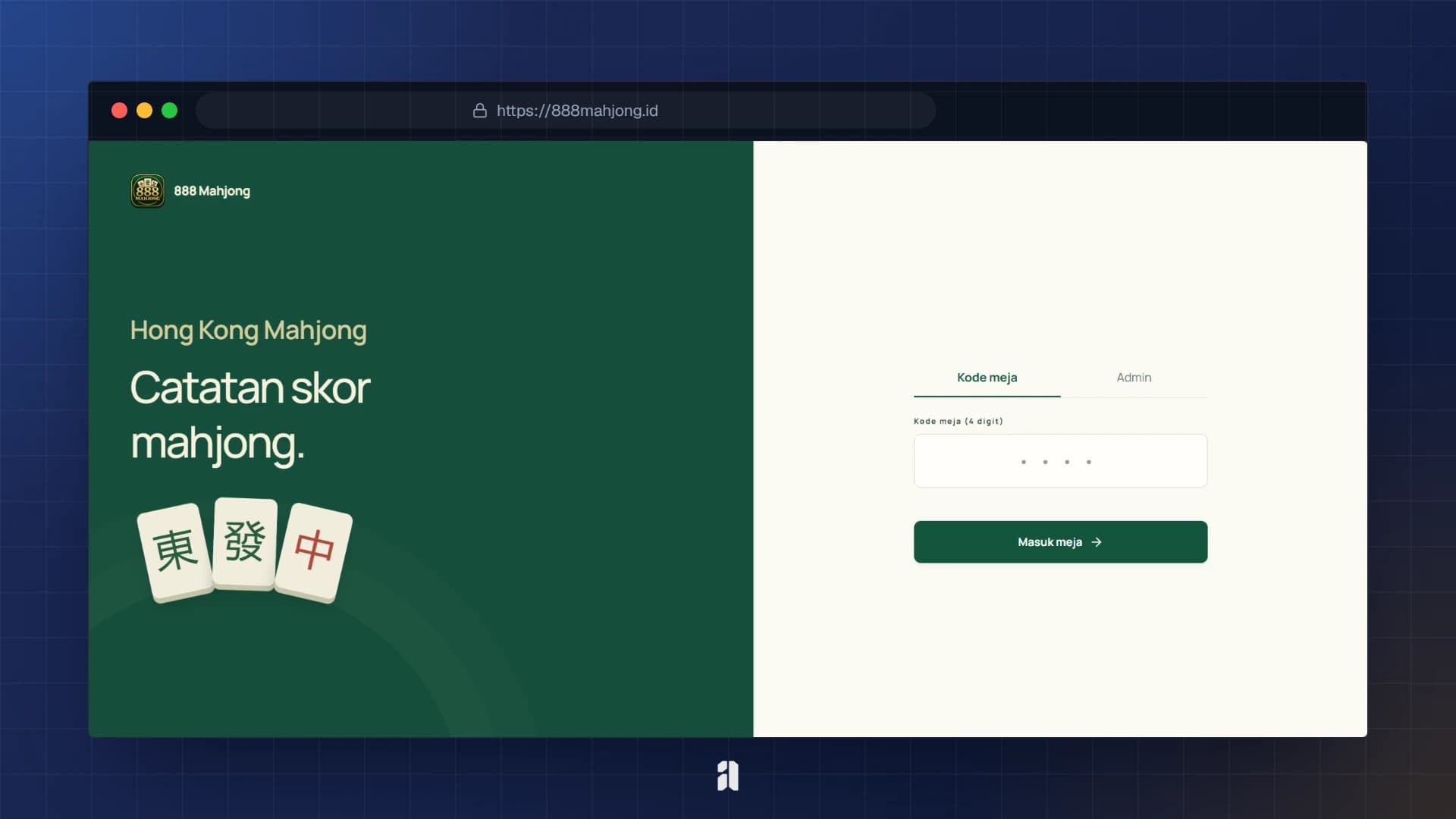
888 Mahjong Scoring Platform
2026A mahjong scoring app for in-person games, combining 2–4 player tables, phone-based scorekeeping, and live event rankings on TV.
Key Features
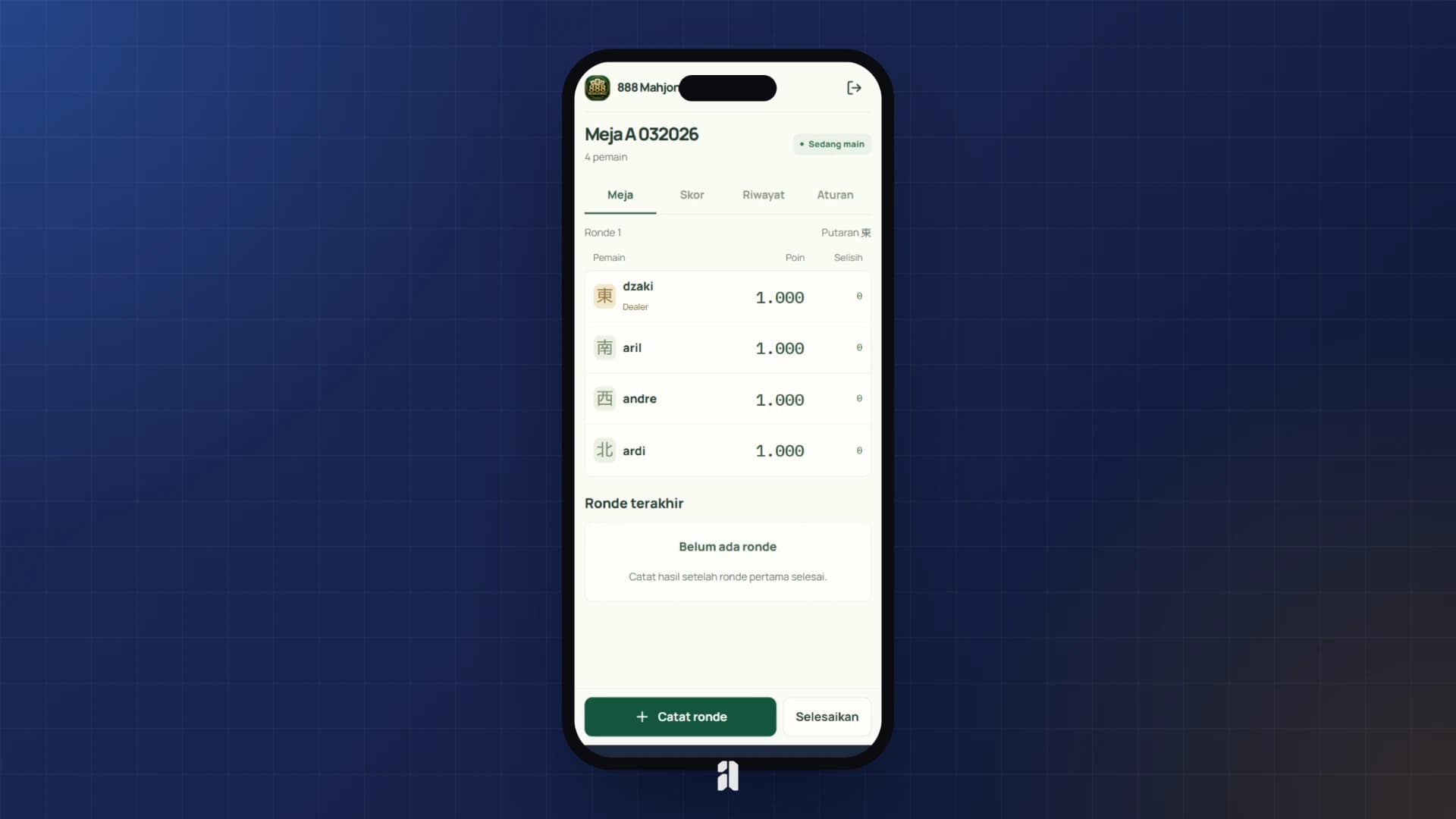
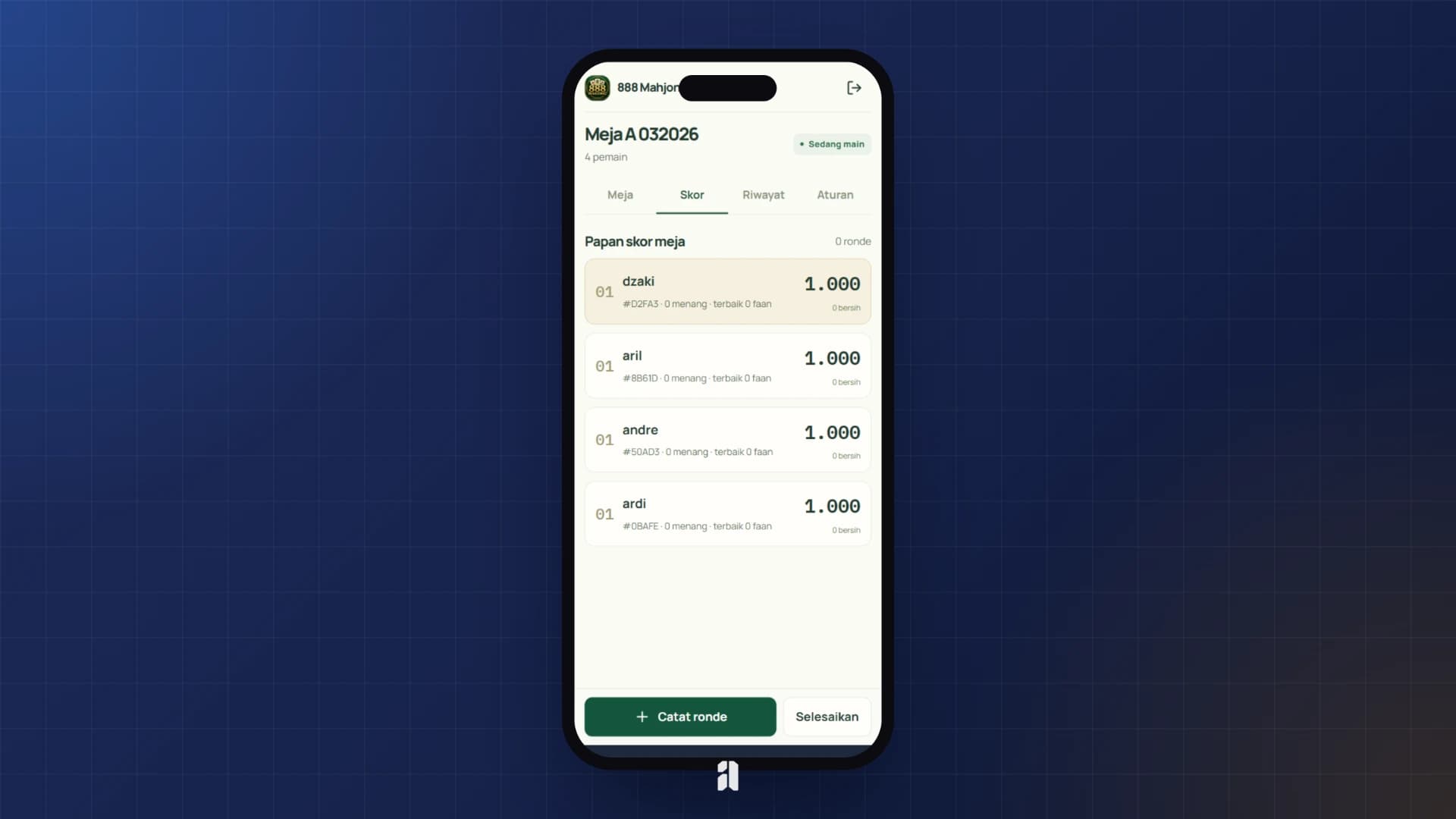
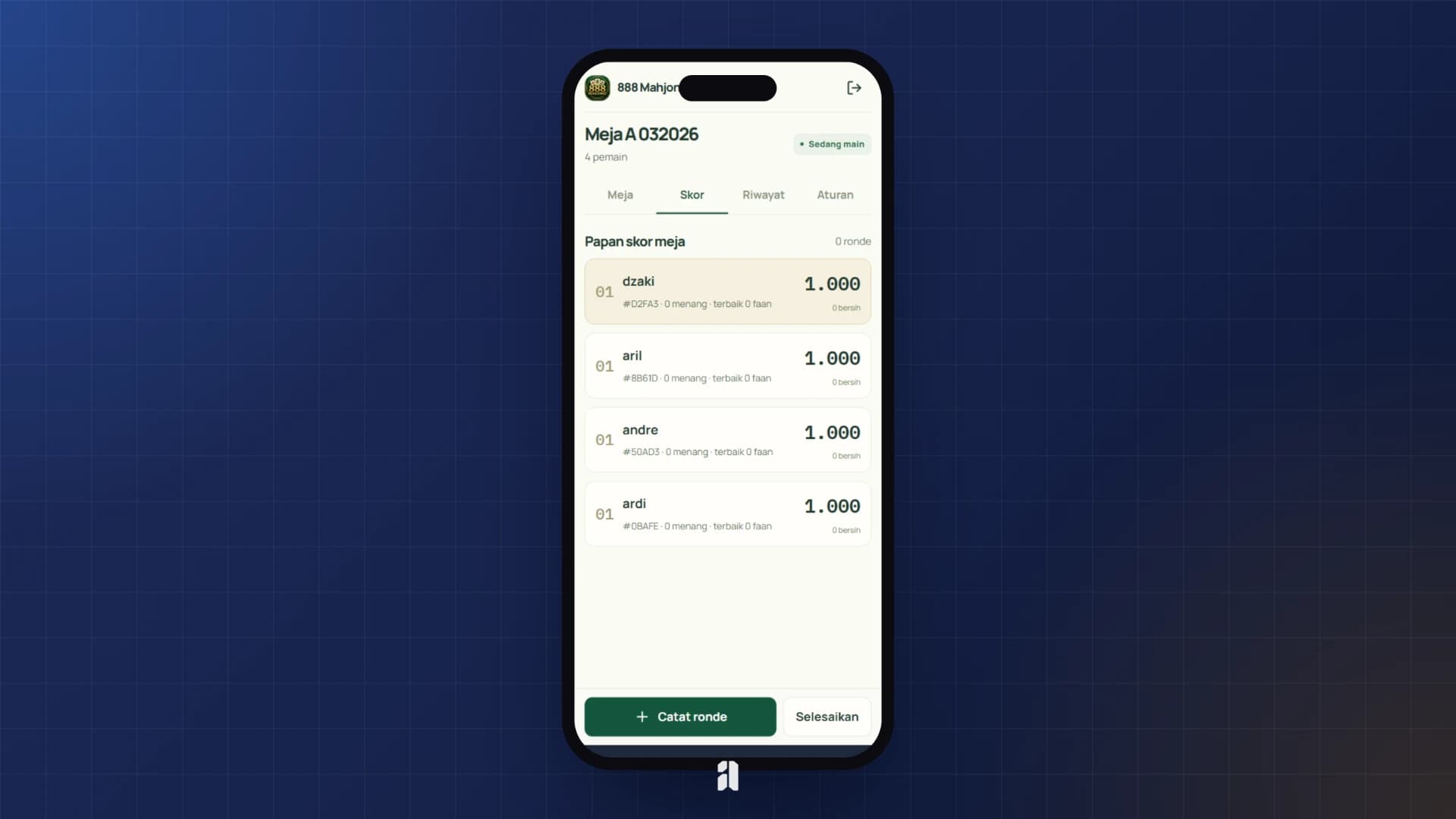
- 01Record scores for 2–4 players during physical mahjong sessions
- 02Review calculated point transfers before confirming each hand
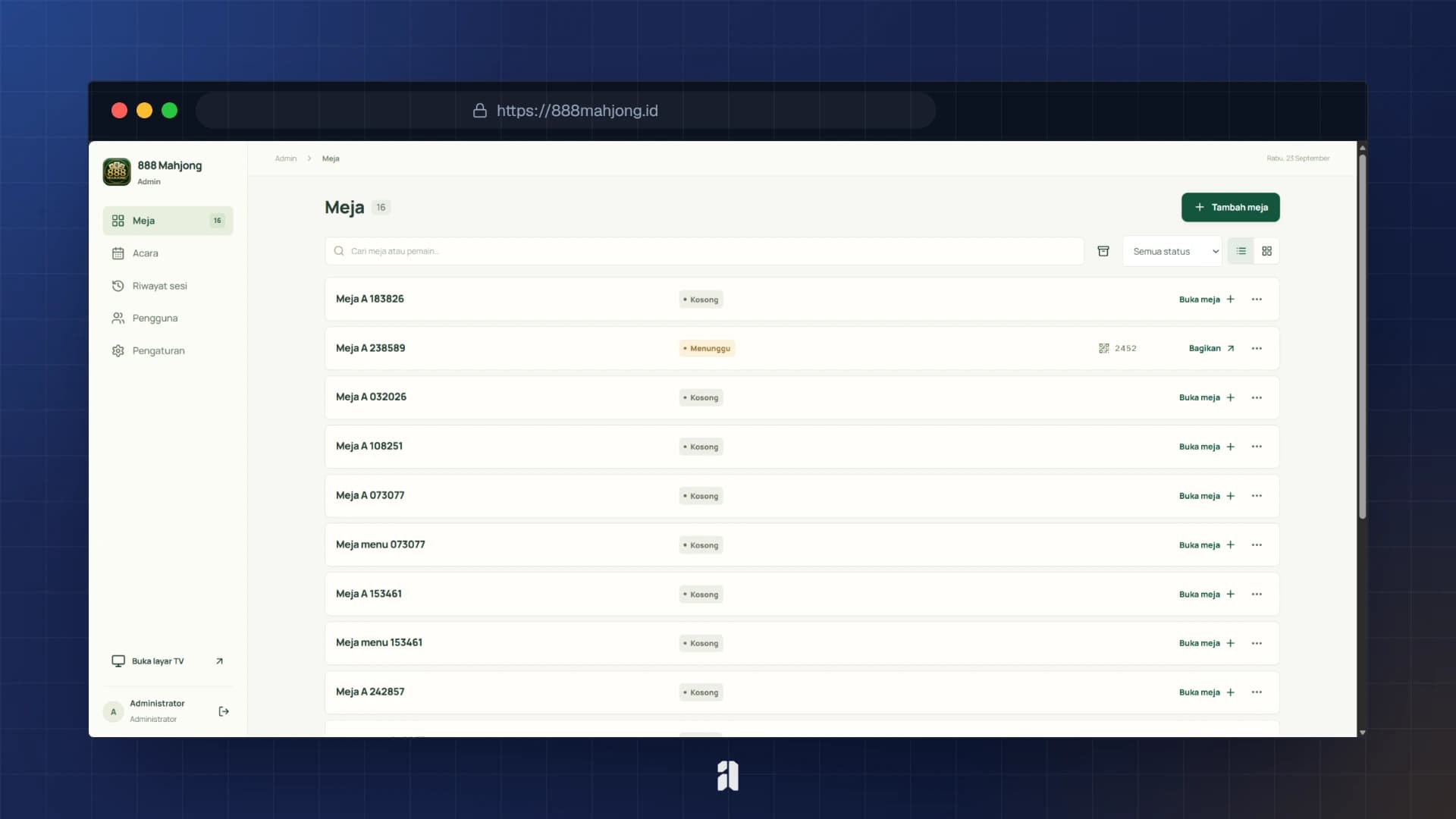
- 03Manage tables and event rules through one administration workspace
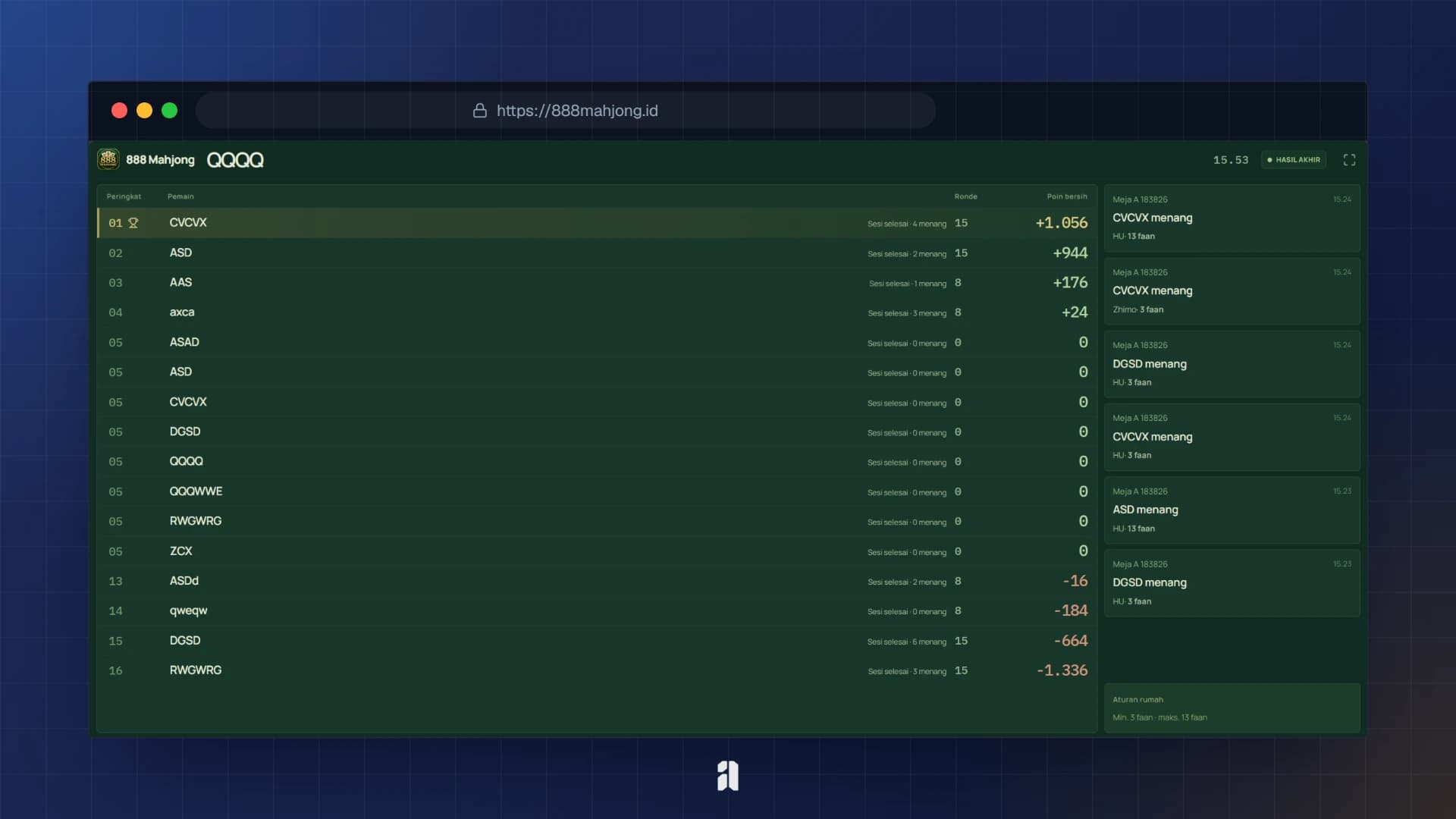
- 04Follow live event standings on a dedicated TV display
- 05Keep participant results connected across multiple event sessions
- 06Correct previous hands while preserving a reviewable result history
- 07Share session outcomes through downloadable result images
- 08Consult Indonesian guidance for scoring and house rules
Project Details
888 Mahjong is a Bahasa Indonesia scoring application for in-person mahjong, connecting 3 complementary experiences: venue administration, phone-based scorekeeping, and a live TV leaderboard. We built the application around physical play, so participants continue using real tiles while the software records results and calculates point transfers. Tables support the standard 4-player format alongside clearly identified house variants for 2–3 players. The outcome is a shared scoring workflow that helps organizers manage sessions while giving players and spectators a consistent view of event standings. The project brings table management and event scoring into 1 connected workflow for venue operators and community organizers. Our implementation covers event setup, player selection, hand entry, session history, and the audience display. Organizers can prepare participating tables and establish event rules before play begins. During an event, returning participants can retain their identity across sessions, allowing standings to reflect their accumulated results. Casual sessions remain separate from event rankings, keeping the purpose of each result clear when a venue runs different types of play. The application separates 3 user needs while keeping saved results consistent across screens. Administrators manage the event, a designated scorekeeper records each table’s hands, and spectators follow standings without using the scoring interface. Svelte provides the browser experience, Go handles application logic, and PostgreSQL stores results. A key design challenge was making corrections understandable: updating an earlier hand must also update the standings while preserving a reviewable history. Players still judge the physical hand and agree on its scoring inputs; the application calculates the corresponding point transfers. The delivered feature set includes 2–4 players per table, a compact Full HD leaderboard showing 18 participants per page, and automatic page rotation every 12 seconds. These are documented product capabilities, rather than claims about customer adoption or measured efficiency gains. Together, they support score entry at the table and shared visibility across the venue. Session history and downloadable result images also make outcomes easier to revisit and share. The project demonstrates a focused approach to digitizing the administration around a physical game while keeping the game itself at the center.